
MLDS speaker · 2026
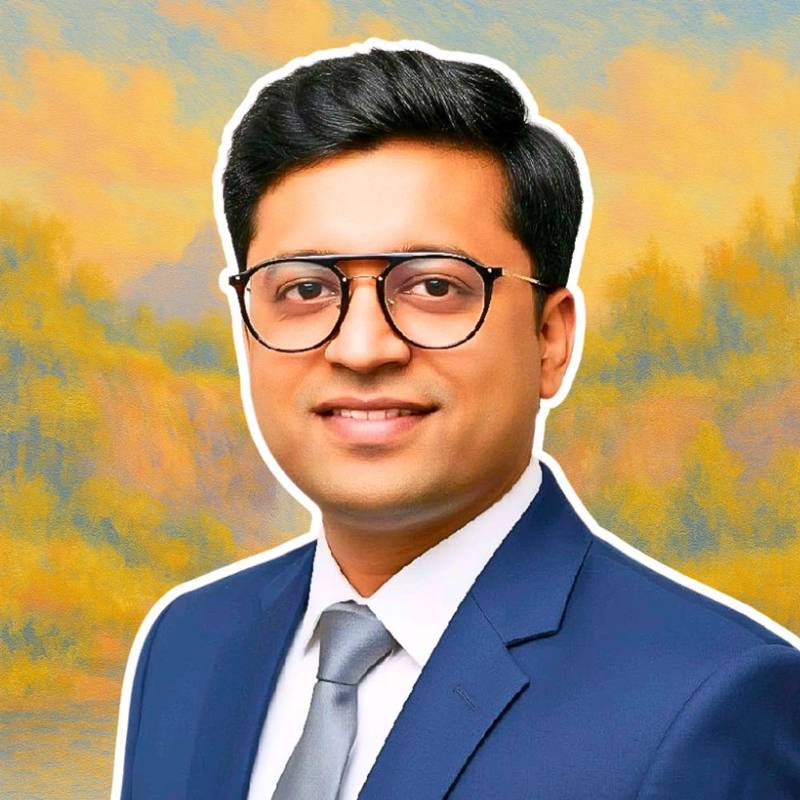
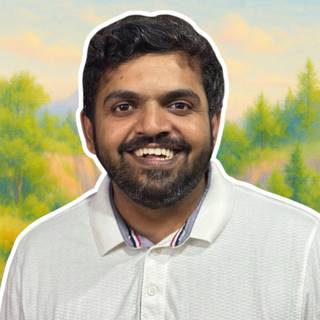
Santanu Bhattacharjee
Senior Chief EngineerSamsung Research
About Santanu Bhattacharjee
Chief AI Staff Engineer with 15 years of experience building and scaling enterprise AI systems—from classical ML to modern Generative AI. At Samsung, I lead initiatives around multimodal LLM platforms, RAG pipelines, and autonomous agentic systems that power data intelligence across global product ecosystems. My work spans solution architecture, LLM/SLM fine-tuning (QLoRA, DPO, RLHF), large-scale data pipelines, and GPU/HPC-driven optimization for production-grade AI. I enjoy operating at the intersection of research and real-world impact—turning complex ideas into reliable platforms that teams can build on. I care deeply about thoughtful engineering, clear design, and growing people. Alongside hands-on leadership of cross-functional teams, I actively contribute to the AI community through IEEE publications and US patents in Knowledge Graph, NLP and Big Data systems. My focus is on building future-ready AI foundations that help organizations reason better, move faster, and make smarter decisions.
1 edition on the MLDS stage · 1 session on record
Talks at MLDS
Sessions from the MLDS agendas, newest first.
MLDS 2026
Bengaluru
26–27 Mar 2026Mar 27, 2026 · 12:40–13:00 · Hall 3 · Bengaluru
Tech TalksCausal Guardrails: Structural Causal Models Keeping Agentic AI Sane
Agentic AI systems are rapidly moving from demos to mission‑critical workflows, but most of them still behave as pattern‑matchers with tools, not as systems that understand cause and effect. The result is familiar: agents that sound confident while suggesting actions that quietly violate business logic, break regulations, or create hidden risk. This talk introduces “causal guardrails”—an architecture where structural causal models (SCMs) sit around GenAI agents to constrain, explain, and validate their decisions. Instead of relying solely on prompts and heuristics, agents must route their plans through explicit causal graphs that encode allowed interventions, downstream impacts, and hard constraints. The session will walk through intuitive examples (credit risk, IT ops, or recommendation workflows), show how to combine LLM-based agents with SCMs in practice, and discuss how this improves robustness, debuggability, and auditability. Attendees will leave with concrete patterns for using causal modeling to keep autonomous GenAI “sane” in real enterprise environments, not just in benchmarks.
More MLDS 2026 speakers
Ravikiran Ravada
Director-AgenticAI
WinWire

Alok Srivastava
Head of Artificial Intelligence- Machine Learning
Groww
Vaibhav Jain
Team Lead, AI Engineering
Millennium

Abhishek Kumar
Manager, AI Research
AIM
Sachin Tripathi
Senior Manager, AI Research
AIM

Kaushik Deb
Associate Director- AI Engineering
Piramal Capital & Housing Finance
Sreejith K Rajendran
AVP-Engineering
Reserve Bank Innovation Hub (RBIH)

Mohamed Imran K R
CTO
E2E Networks Limited

Ravi Shankar
Associate Director, AI
Credit Saison India

Sourabh Gupta
Head of Engineering
Scapia

Sumit Belwal
Senior Solution Architect, AI & Automation
EY GDS Consulting

Ashish Prasad
Senior Software Engineering Lead (AI/ML)